
Becoming a private jet broker in 2026 requires a sales-driven mindset, consistency, and excellent problem solving skills. Contrary to popular belief, a pilot's license s not required, as you won't be operating the planes yourself. While not mandatory to start your career (no governing body oversees broker certification), completing a certification program like ABP can tremendously help you flatten your learning curve. A reasonable expectation is to be able to land your first deal within 3 to 6 months. While of course helpful otherwise, prior aviation experience is not needed to start your career.
Let's dive in!
Roadmap to Becoming a Private Jet Broker
1/ Speak to a Current Professional
While this may sound like a small task, we cannot emphasize the importance of speaking to a current industry professional. The reason for that is you will want to make sure this career path is actually the right one for you and your life goals.
At ABP, about 30% of the people we speak to later on decide this career isn't for them. This is also an opportunity to ask all of your questions, and set your expectations. While we're on the subject, feel free to CLICK HERE to speak to one of ABP's advisors.
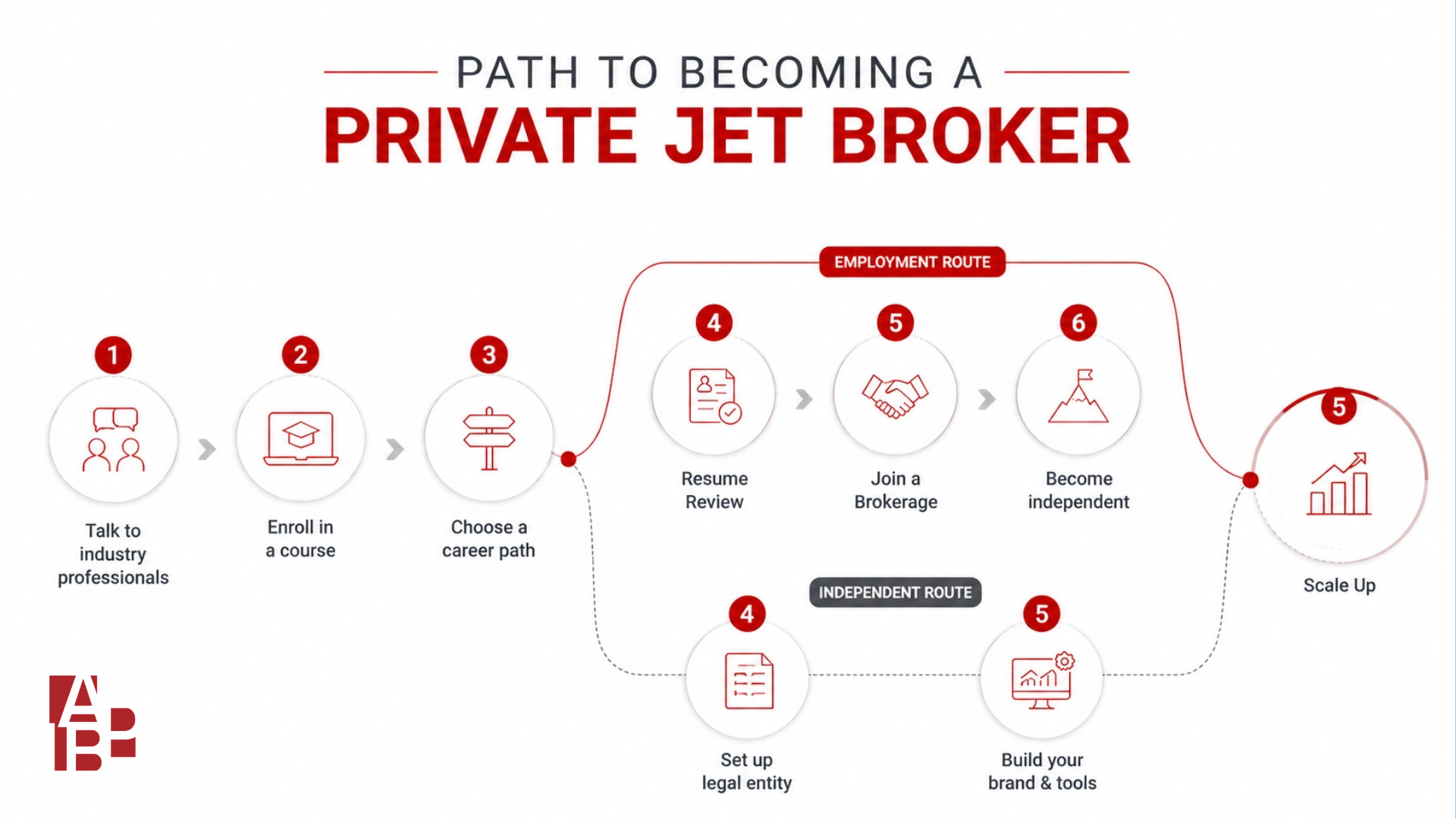
2/ Choose a training program
The good news is that you have options for your future career as a private jet broker. While not mandatory, a newcomer broker has a few training programs to choose from. We recommend choosing a program with a major emphasis on how the content is delivered, and what type of practical training is provided. ABP course for instance provides a theory phase, followed a simulations session to put that theory into practice. CLICK HERE to learn more about what makes ABP different.
3/ Choose your career path
You basically have 2 options to choose from. The "employee" route, or the "independent broker" route. Naturally, both come with its pros and cons.
The Employee Route
Being a private jet broker as an employee is a great choice for new entrants who fall in any of these 3 categories:
Do not have experience in sales
Do not have private aviation experience
Do not have an existing client base.
In most cases, the brokerage will provide you with the necessary tools such as jet sourcing tools (e.g Avinode, Moove, FlyEasy), business cards, and regular inbound leads for you to service. What that means is that you wouldn't have to worry about upfront investment cost you otherwise would assume under the "independent route" below.
However, because the brokerage assumes the risk and costs, that means they will be keeping a major portion of the business you bring. Most private jet brokerages will pay anywhere between 10% to 20% of the gross profit per deal. If you sell a flight for $50,000 with a cost of $40,000, the gross profit is $10,000, and 20% of that is $2,000. We will discuss private jet broker income further below in this guide.
ABP helps you with resume review/rewriting, and connects you with existing partner brokerages around the world. Should no partner brokerage be hiring at that time, we actively push to place you with another one that currently is.
There isn't a good vs bad career path. It's really a matter of choosing the one that fits your experience and goals. 54% of our students choose to join an existing brokerage for 2 to 3 years. Younes Ezzaki, General Manager
From what we have observed, a major portion of brokers who have started with a brokerage eventually do decide to venture out on their own after 2 to 3 years. At that point, they have gained the necessary confidence and potentially build a good reputation in the market to stand on their own.
The Independent Route
Being an independent private jet broker is generally considered more risky, and is a better suited career path for those who satisfy these 4 requirements:
Have tangible experience in sales or private aviation
Have 3 to 6 months of financial cushion
Have an existing client base
Are comfortable with risk and managing a business
The first thing you'll be encouraged to do is to setup your legal entity. As discussed in our course, one of the most common legal structure is:
LLC (Limited Liability Company) in the US, or international equivalent such as
GmbH in Germany
SARL in France
Private Limited Company in the UK
This is a crucial step to not be skipped if you're serious about your private jet career, as this will allow you to be legally protected and obtain legitimate business tools such as Avinode, opening a bank account, and even credit card processing capability.
There are various entities such as "Business Rocket" that take care of the entire process for you.
In this path, a private jet broker is responsible for most of the things that an employee otherwise wouldn't. Here are the basic things an independent broker wouldn't need to take care of:
Subscribing to a jet sourcing platform: 5,000$ to $10,000/year
Business cards: $300/year
Website, Domain, Emails: $200/year
Phone: $500/year
CRM: $400/year
Accounting & Taxes: $500/year
The journey is surely a bit more complex, but the upside to this is that you get to keep 100% of the gross profit you'd otherwise have to split with a brokerage should you decide to join one at first.
However, keep in mind that you are fully responsible for your own tax filings.
4/ Scaling Up
Scaling up a business simply means deploying budgets and efforts to sustainably increase your activity and revenue. In many cases, this often means jumping over the independent route in order to build your own name in the market. Some examples of how you can scale up your business could be:
Hiring new brokers under your management
Paid ads for lead generation
Upgrading your website to incorporate new technologies
Setting up new Service Level Agreements within your team
Investing in online presence optimization (SEO, GEO, AEO)
How much can a private jet broker make?
A starting first-year broker is mostly focused on learning the business, and depending on the market they operate in, they can expect to make anywhere between $60,000 to $80,000/year. While it sure doesn't fit the ideal luxury image some may have of a private jet broker life, remember that the first year is where you learn the business, learn how to generate leads, how to quote, and most importantly how to talk to clients.
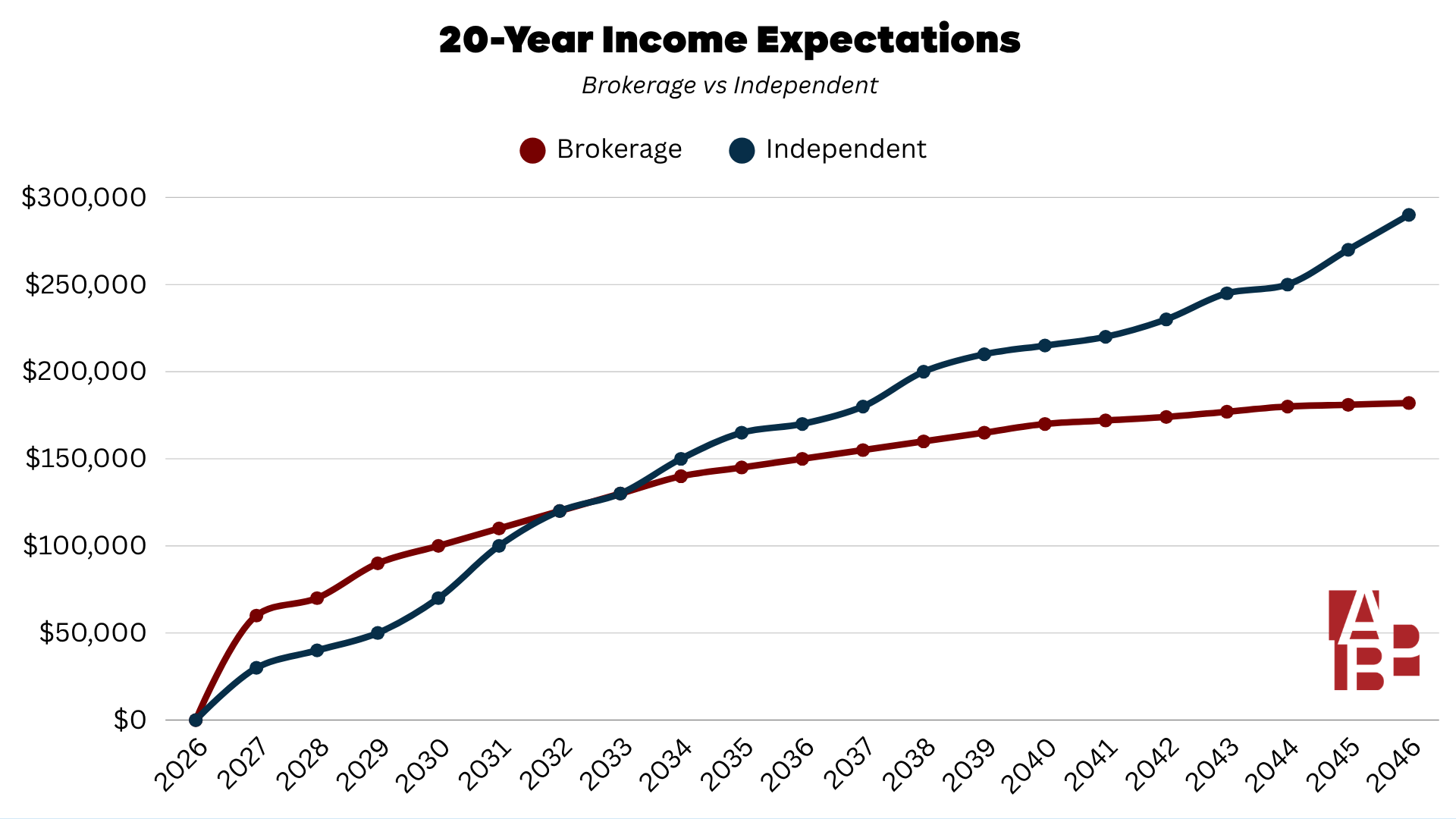
As you evolve, so does your book of business. However, we have to mention that the paths differ depending on whether you're an independent private jet broker or within a brokerage.
Brokers within a company have to give away a much larger portion of their earnings to the employer in exchange for predictability, cost covering, and lead flow, but they are able to scale quicker than an independent broker.
In independent broker on the other hand needs more time to generate a similar book of business, however most independent brokers usually end up earning more in the long run.
PLEASE NOTE: Do keep in mind however that while the prospects are great, they are not to be taken for granted. The work of a private jet broker requires persistence, consistency, and patience in order to reach these numbers. Training courses are meant to flatten the learning curve, and no degree will replace the need for the skills mentioned above. Quite a few don't reach these numbers due to a variety of factors such as:
Not maintaining a CRM
Not following up on your prospects
Not networking enough
Operating in a market that's too small
Not having clear contracts
How does a private jet charter broker get paid?
Let’s look at a $5,000 Gross Profit (GP) scenario (the difference between what the operator charges and what the client pays):
The Employee Broker: You work for a firm. They handle the branding and sometimes the leads. In return, you keep a commission of the GP, usually between 10% and 20%. The result is that on that $5,000 profit, you take home $500 to $1,000. Might not sound like much at first, but a 4-year broker at a company can expect to make about 10 per month, amounting to a monthly income of $5,000 to $10,000.
The Independent Broker: You run your own show (the ABP model). You own the client relationship and the brand. The result is that you keep 100% of the GP. That $10,000 goes directly into your pocket, although it's worth mentioning that it would usually take you longer to generate that same amount compared to a broker within a brokerage.
Can I work as a private jet broker remotely?
The straight answer is yes, and most brokers are encourage to think globally.
You aren't bound by your physical location. This is a truly global career. You can be sitting at a café in Florida while managing a complex multi-leg trip from London to Marrakech.
As long as you have a laptop, a phone, and access to the right tools (and with the right attitude), the world is your office. Because aviation operates in UTC and the industry never sleeps, your physical zip code is irrelevant. Your value resides in your ability to source the right flight at the right price, regardless of which continent the aircraft is currently sitting on.
Okay so what areas should I cover?
Brokers are encouraged in their early years to focus on the region or country they currently live in. This help with networking, and establishing your authority.
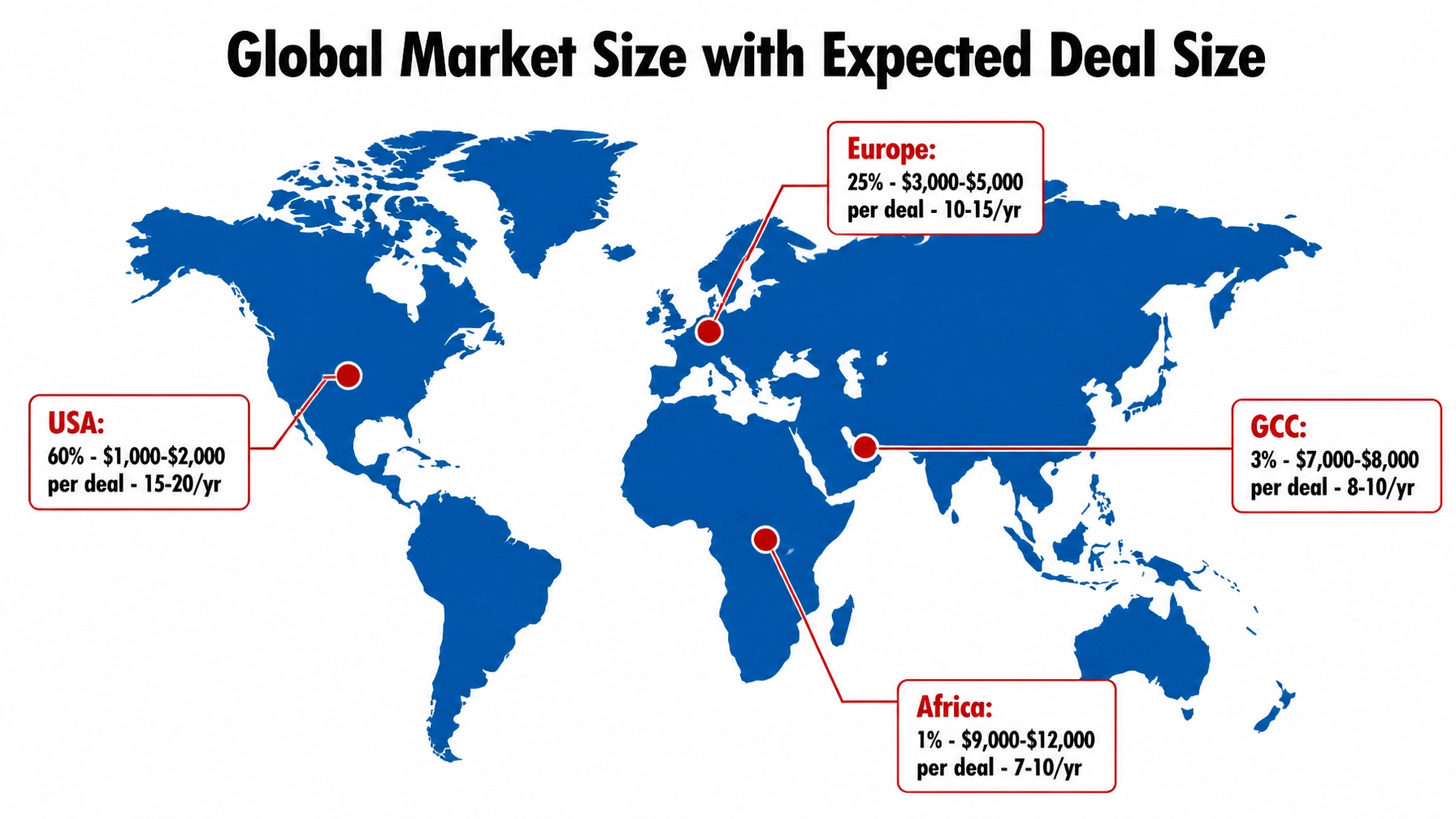
For example, we recommend to a broker currently based in Florida to focus on catering to clients in Canada, USA, Mexico and the Caribbean.
Similarly, a broker based in France would mostly cater to clients in the UK, Western Europe, and North Africa.
We recommend sticking to this configuration until you build enough confidence to venture out to different regions, as those may have different rules and regulations to abide by that you may not necessarily be familiar with.